Vinicius Monteiro Dias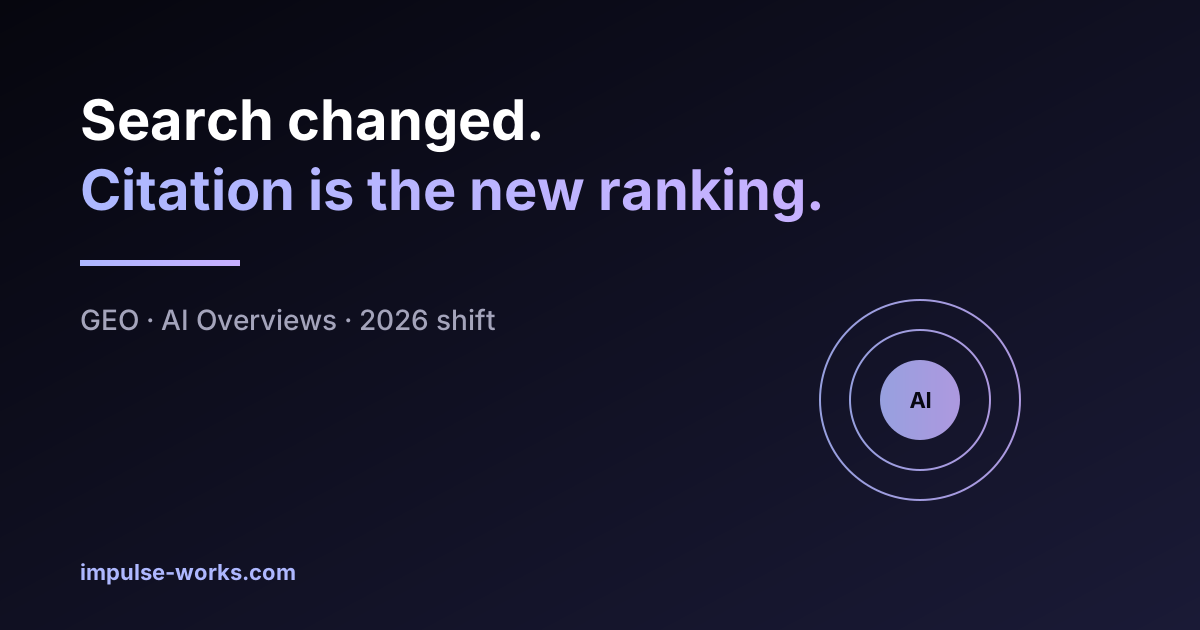
TL;DR. If your clinic used to show up on Google and now it does not, you are not imagining things and your dev did not break the site. Google quietly changed how search works. AI summaries now sit on top of the results page, answering the patient before they click any link. The old SEO checklist (keywords, backlinks, alt text) is no longer enough. The new game is getting cited by the AI, not just ranked under it. This post explains the shift in plain words, the three reasons your clinic dropped, and three things you can do this month.
The shift, in plain language
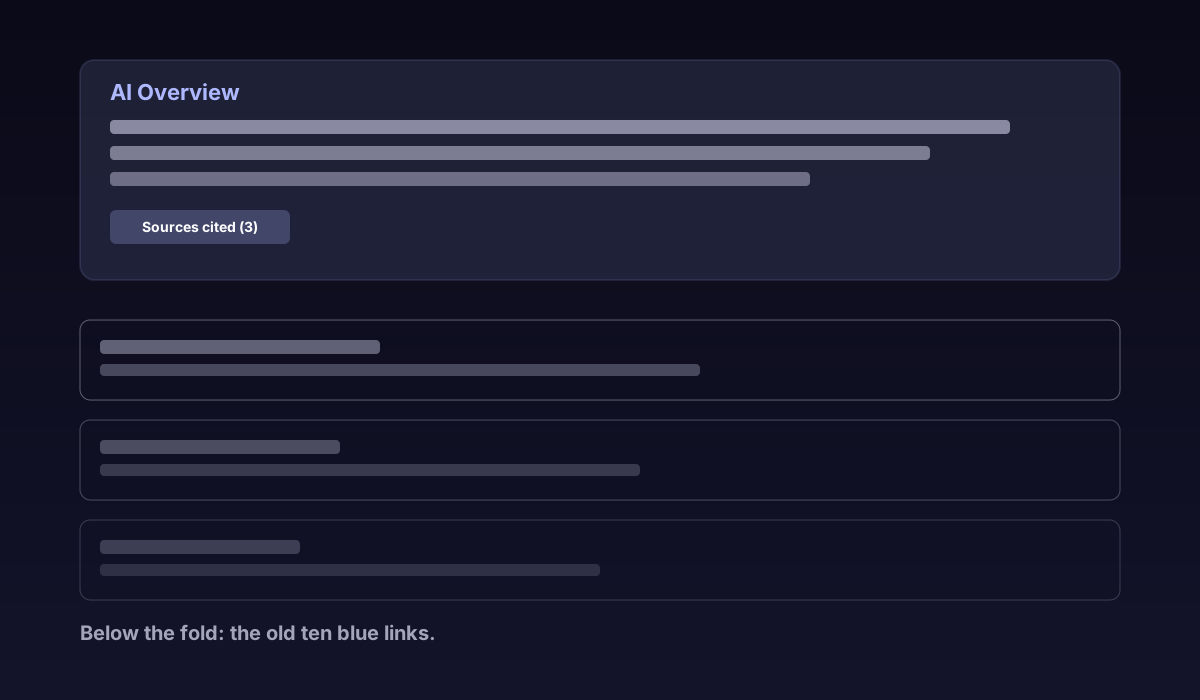
For twenty years Google showed ten blue links, and the sites that won the SEO game took the clicks. In 2024 and 2025 that page changed shape. Now, when a patient searches "best dentist near me" or "physio for back pain", Google answers the question itself, usually citing two or three sources and pushing everyone else below the fold. The industry calls this Generative Engine Optimization, or GEO. Same goal as SEO (be visible), different mechanics. You are no longer competing for rank, you are competing for citation.
Why your clinic dropped, three concrete reasons
-
Your content reads like a brochure, not an answer. AI engines pull the paragraph that directly answers a question. If your homepage says "We are a clinic with twenty years of experience", that answers nothing a patient typed. The site that says "Yes, dental implants take six to twelve weeks to fully integrate, here is what changes per patient" gets quoted instead.
-
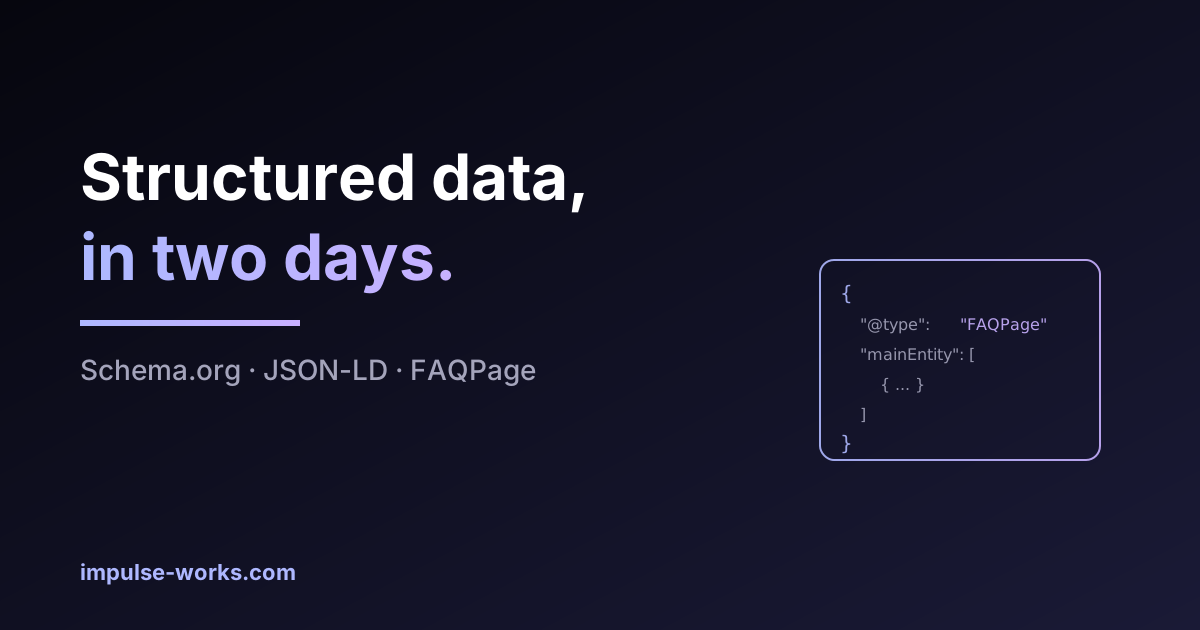
No structured data. Schema.org markup (JSON-LD on every page) is how the engine knows you are a clinic, what services you offer, your hours, and your reviews. Without it, the AI has to guess, and it usually does not bother. Most clinic sites built before 2023 have none.
-
No real author, no real proof. AI engines weight E-E-A-T (Experience, Expertise, Authoritativeness, Trustworthiness) more than ever. A site with no named author, no case studies, no patient outcomes, looks anonymous. Anonymous does not get cited.
What the new game looks like
Four things AI search engines (Google AI Overviews, Perplexity, ChatGPT search, Claude) actually pick up:
- Structured data on every page. MedicalClinic, MedicalBusiness, FAQPage, BreadcrumbList. The engine reads JSON, not vibes.
- FAQ blocks in patient language. Real questions, real answers, in the same words a patient types.
- An author with a face and a track record. Bio page, LinkedIn, credentials, ideally schema.org Person markup linking back.
- Proof, not promises. Case studies with patient names (with consent) or de-identified outcomes. Numbers beat adjectives.
What to do this month, three actions
- Audit your structured data. Open your homepage in Google's Rich Results Test. If nothing shows up, that is your first fix. Add MedicalClinic and FAQPage schema, ship it, re-test.
- Add a real FAQ block to the three pages that drive bookings (homepage, main service page, contact). Five to seven questions per page, written as if a patient typed them at 11pm on their phone.
- Pick one case study and write it up. One paragraph of context, one of treatment, one of outcome with at least one number. Publish it on its own page, link from the homepage.
These three things move you from "invisible to AI" to "citable" in roughly thirty days. They do not require rebuilding the site.
The deeper shift
Local search is not dying, it is professionalizing. The clinics that win in 2026 are not the ones with the prettiest homepage, they are the ones that read like a useful answer to a real question. That is good news if you are an owner who actually knows the craft, because the noise floor (generic agency sites, template clinic builds) is exactly what AI engines now filter out.
If you want a structural fix, read the breakdown of websites for clinics built around AI citation, or see how we ship the same logic into websites for law firms. The case studies page shows what the structure looks like when shipped.
Want a 20 minute audit of where your clinic stands in the AI search era?
I run a free diagnosis for clinic owners: I check your structured data, your top three search intents, and where you currently appear (or do not) in AI overviews. You leave with a one-page action list. Book a free diagnosis.